
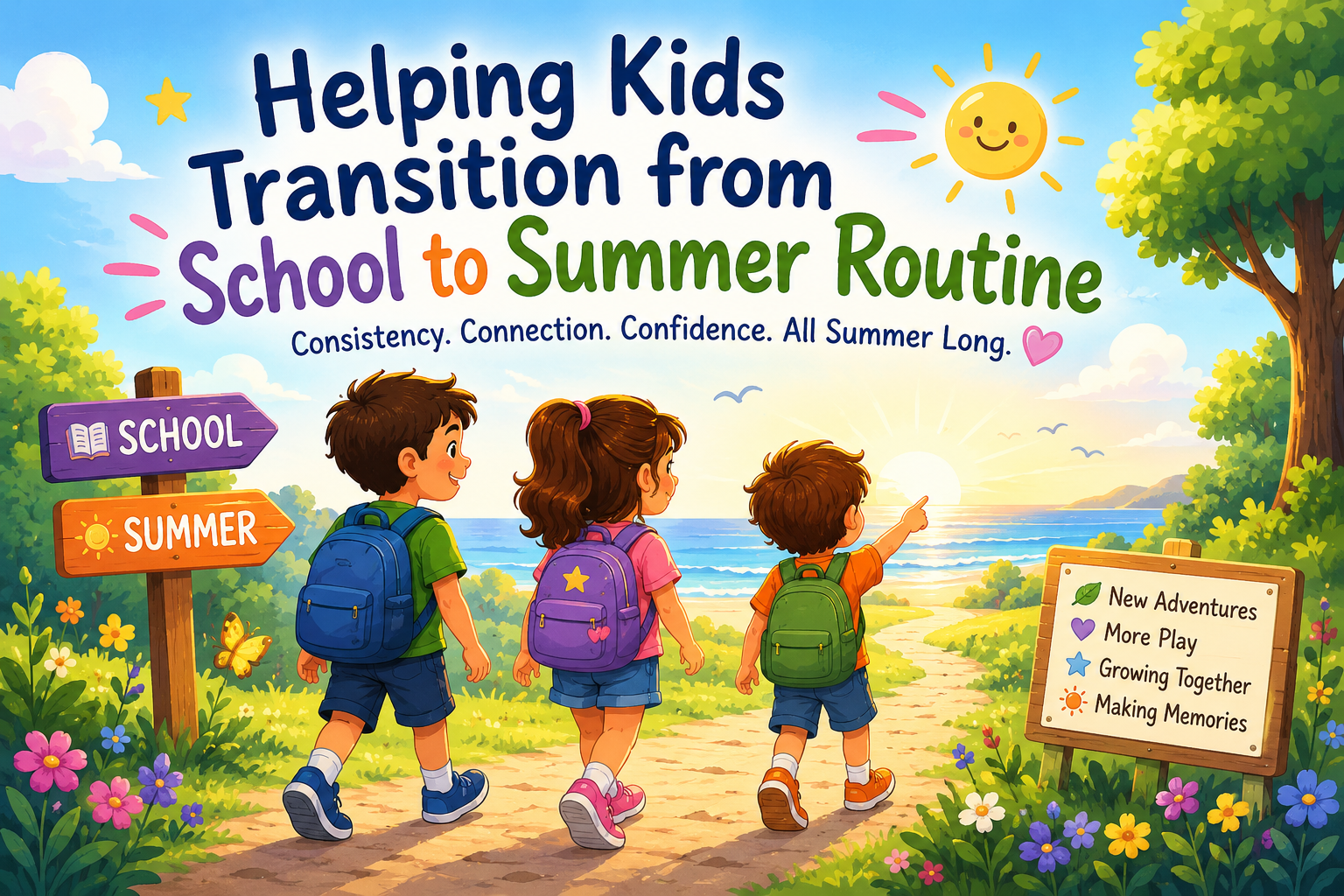

Helping Kids Transition from School to Summer Routine
When school ends for summer, many families look forward to slower mornings, fewer responsibilities, vacations, and more time together. Yet for many parents, the transition into summer can also bring unexpected stress. Children who seemed emotionally balanced during the school year may suddenly become more irritable, restless, emotional, or resistant at home. The transition from school to summer can feel difficult for many families, but with consistency, connection, and gentle structure, children can adjust in healthy and meaningful ways.
Parents often notice:
- increased sibling conflict
- difficulty with sleep schedules
- emotional outbursts
- excessive screen time
- boredom complaints
- struggles with motivation and routine
While summer can feel exciting, the sudden loss of structure can also feel overwhelming for children. The routines of school provide predictable rhythms that help children feel emotionally grounded and secure. When those rhythms disappear overnight, many children experience difficulty adjusting.
Child psychiatrist Dr. Bruce Perry, known for his work in child development and trauma, emphasizes that children thrive in environments that feel predictable, relational, and regulating. In many ways, healthy summer routines are not about strict control — they are about creating a sense of emotional safety and stability during a season of transition.
Why the Transition to Summer Can Feel Difficult for Children

During the school year, children experience consistent patterns almost every day:
- wake-up times
- meals
- social interaction
- movement
- classroom expectations
- bedtime routines
Even if children occasionally complain about school structure, those predictable patterns help regulate the nervous system. Children often function best when they know what to expect.
When summer begins, many of those external anchors suddenly disappear. Bedtimes shift. Meals become inconsistent. Screen time increases. Days become less predictable. For some children, this freedom feels exciting. For others, it can feel emotionally disorganizing.
Dr. Bruce Perry’s work highlights the importance of rhythm and predictability in helping children feel safe. Consistent daily patterns help regulate stress responses and support emotional balance. Without some form of structure, children may struggle to manage transitions, emotions, and behavior.
This does not mean parents need to create rigid schedules or perfectly planned summer days. Instead, children often benefit most from simple, dependable routines that provide balance between freedom and stability.
Structure Creates Emotional Safety

Many parents hear the word “routine” and immediately imagine strict schedules, packed calendars, or constant structure. However, healthy routines are less about control and more about creating emotional predictability.
Children feel safer when they know:
- what the general flow of the day looks like
- when transitions are happening
- what expectations exist
- where connection and boundaries are present
Summer routines can help reduce emotional overwhelm by creating gentle daily anchors that children can rely on.
Benefits of consistent summer routines may include:
- improved emotional regulation
- smoother transitions throughout the day
- reduced anxiety and irritability
- healthier sleep patterns
- less behavioral conflict
- increased cooperation and independence
Children do not need every moment planned. In fact, overscheduling can sometimes create additional stress. The goal is not perfection — it is consistency, flexibility, and emotional balance.
Practical Ways to Create a Healthy Summer Routine
Maintain a Consistent Sleep Schedule

Sleep plays a major role in emotional regulation for both children and adults. During summer break, it can be tempting to allow dramatically later bedtimes and inconsistent wake-up schedules. While occasional flexibility is healthy, large disruptions in sleep routines can contribute to irritability, impulsivity, and emotional dysregulation.
A helpful approach is to maintain relatively consistent wake-up and bedtime windows while still allowing summer to feel relaxed and enjoyable.
Create Predictable Daily Anchors

Children often respond well to a few dependable parts of the day, even if the overall schedule remains flexible.
Simple daily anchors may include:
- morning routines
- family meals
- outdoor play
- reading time
- quiet or rest time
- evening wind-down routines
These predictable moments create rhythm and help children feel emotionally grounded throughout the day.
Balance Freedom With Structure

One of the beautiful parts of summer is the opportunity for more freedom, creativity, and spontaneity. Children benefit from having time to relax, explore interests, and simply be kids.
At the same time, complete lack of structure can sometimes create emotional chaos. Many children do best when freedom exists within gentle boundaries.
For example:
- screen time may have limits
- chores may still exist
- outdoor activity may remain part of the day
- bedtime routines may still be consistent
Healthy structure does not remove fun from summer — it often helps create calmer, more enjoyable experiences for the entire family.
Limit Constant Screen Stimulation

During summer break, screens can easily become the default activity for long stretches of the day. While technology can certainly provide entertainment and connection, excessive screen time may increase overstimulation, emotional reactivity, and difficulty transitioning to non-screen activities.
Children benefit from balance between digital stimulation and real-world experiences such as:
- outdoor play
- creative activities
- movement
- reading
- imaginative play
- social interaction
It is also important to remember that boredom is not necessarily a problem to solve immediately.
Boredom Can Be Healthy

Many parents feel pressure to constantly entertain their children during summer break. However, boredom can actually support important developmental growth.
When children experience unstructured downtime, they often develop:
- creativity
- imagination
- frustration tolerance
- independence
- problem-solving skills
Some of the most meaningful childhood memories come from simple moments of exploration, play, and imagination rather than highly structured activities.
Allowing children space to be bored occasionally can help them learn how to create engagement from within instead of constantly relying on external stimulation.
Connection Matters More Than Perfection

Parents today often carry enormous pressure to create the “perfect” summer filled with trips, activities, camps, and memorable experiences. While special activities can certainly be meaningful, children often remember emotional connection more than elaborate plans.
Small moments of connection can become emotional anchors during the summer season:
- family walks
- shared meals
- game nights
- bedtime conversations
- playful interactions
- device-free time together
Dr. Bruce Perry’s work consistently emphasizes the healing and regulating power of healthy relationships. Children build resilience not only through structure, but through feeling emotionally connected, safe, and supported by the adults around them.
Summer does not need to look perfect to be meaningful.

A Gentle Reminder for Parents
Transitions can be difficult for children — and for parents as well. Summer routines do not need to be rigid, complicated, or perfectly organized to be effective.
Often, the most important things children need are:
- emotional safety
- consistency
- connection
- predictable rhythms
- caring relationships
A calm and connected summer is not built through constant entertainment or perfect parenting. It is often created through small daily moments that help children feel secure, supported, and understood.
As families move from the structure of school into the flexibility of summer, gentle routines can help create a season that feels both relaxing and emotionally balanced.
At Desert Peace Therapy, we believe that mindful structure, emotional connection, and compassionate support can help children and families navigate life’s transitions with greater confidence and wellbeing.
If your family is navigating emotional challenges, behavioral concerns, or difficult transitions this summer, we’re here to help.
Find inner peace through our therapy services
Experience unmatched well-being
